Gardeners and indoor plant enthusiasts may encounter tiny, moth-like insects that scatter in a cloud when foliage is disturbed. These are whiteflies, a group of over 1,500 species related to aphids and mealybugs. Measuring less than a tenth of an inch, these heart-shaped pests feed on plant sap, weakening growth and leaving behind a sticky residue known as honeydew.
Whiteflies can complete a generation in as little as 16 to 22 days, and overlapping life stages often mean that eggs, nymphs, and adults are present simultaneously. This rapid reproduction makes early detection and consistent management essential.
Recognizing the Signs and Conditions That Favor Whiteflies
Adult whiteflies are triangular, yellowish-headed insects that resemble tiny moths. Their cone-shaped eggs are laid in circular clusters on the undersides of leaves near veins. After hatching, oval nymphs crawl to a feeding spot and remain there through several developmental stages. A gentle shake of an affected plant will often produce a telltale cloud of these insects.
Infestations are more likely on plants that are already stressed or have smooth, soft leaves. High-nitrogen soil encourages lush new growth, which whiteflies prefer, and hot, dry weather between 80 and 90 degrees Fahrenheit accelerates their reproduction. The absence of natural predators, often due to broad-spectrum pesticide use, can also allow populations to surge.
Common hosts include houseplants, greenhouse crops, and warm-season vegetables such as eggplant, okra, bell pepper, cabbage, tomato, sweet potato, and sweet corn.
Damage and Control Strategies
While whiteflies rarely kill a plant outright, heavy feeding can cause chlorosis, defoliation, and stunting. The honeydew they excrete can lead to sooty mold and attract ants. In greenhouses, where conditions are ideal, infestations can spread quickly among closely spaced plants.
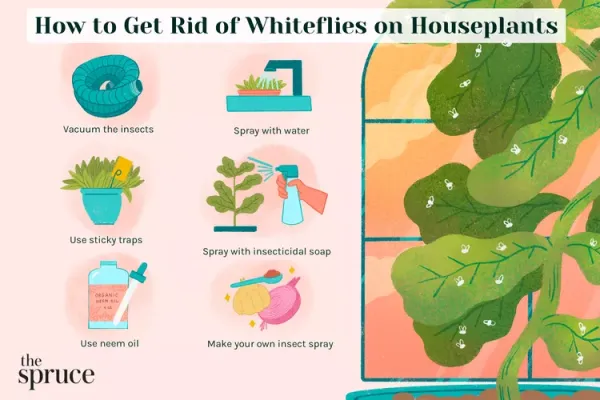
Because whiteflies quickly develop resistance to pesticides, mechanical controls are often the first line of defense. A strong spray of water from a hose or sink sprayer can dislodge adults, larvae, and eggs. Sticky traps, either hung or placed on stakes, are also effective for capturing adults.
Insecticidal soap, applied at a weak concentration (starting with one teaspoon per gallon of water), can help reduce populations. Neem oil, which is absorbed by the plant, offers some residual protection and is safe for vegetables and ornamentals. For a homemade remedy, a paste of garlic, onion, and cayenne pepper steeped in water and mixed with dish soap can be used as a leaf spray.
Pyrethrin sprays, derived from chrysanthemum flowers, are considered relatively safe for indoor use, but synthetic pyrethroids should be avoided. Always check the label to confirm whiteflies are listed as a target pest. Note that pyrethrin is toxic to fish and can harm beneficial insects, so use it with caution.
Vacuuming adult whiteflies from houseplants can interrupt the life cycle, and encouraging natural predators—such as lacewings, ladybugs, and big-eyed bugs—can provide long-term control in gardens and greenhouses. Reflective mulch, which confuses pests with ultraviolet light, is another outdoor option.
Prevention: Keeping Whiteflies at Bay
Preventing an infestation is often simpler than treating one. Inspect new plants before bringing them home and isolate them for several days. If needed, spray with neem oil or pyrethrin outdoors before introducing them indoors.
Maintaining plant health is key: water adequately, ensure good air circulation, and avoid excessive nitrogen fertilizer. Moving houseplants outdoors in summer can expose them to natural predators. Strongly scented plants like mint, thyme, and sage can also deter whiteflies when used as companion plants or placed near indoor pots.
By combining early detection with a mix of mechanical, organic, and cultural controls, gardeners can keep whitefly damage in check and protect both indoor and outdoor plants.