Gardeners seeking a landscape that remains visually engaging through winter's dormancy and summer's heat have a range of plant choices that deliver interest in multiple seasons. A well-planned garden can offer blooms in spring, lush foliage in summer, vibrant color in autumn, and structural appeal in winter, while also providing food and shelter for wildlife. The following 13 plants, selected for their multi-season attributes, can serve as the backbone of a four-season garden.
Among the most versatile is the oakleaf hydrangea (Hydrangea quercifolia), a southeastern U.S. native that thrives in full sun to partial shade and reaches 6-8 feet tall. Its white flower clusters age from creamy white to dusky pink and green, eventually drying to light tan and persisting into winter. The large, deeply lobed leaves turn crimson and burgundy-purple in autumn, and after leaf drop, the copper-brown stems with exfoliating bark provide winter interest. This shrub tolerates hot, humid conditions and prefers moist, well-drained soil enriched with mulch or compost.
Another hardy option is ninebark (Physocarpus opulifolius), native to eastern North America and exceptionally cold-hardy (zones 2-8). It offers pinkish-white flower clusters in spring, chartreuse to deep green foliage that turns yellow in fall, and red berries that follow the blooms. In winter, its peeling bark in shades of red, copper, and light brown becomes a focal point. Ninebark is drought-tolerant, adapts to various soils, and attracts pollinators and birds.
Roses (Rosa spp.) can also contribute year-round, especially species and old garden varieties that produce showy hips in fall and winter. To encourage hip development, gardeners should stop deadheading repeat bloomers by early September, allowing time for fruit to set. The hips, which may be orange, yellow, red, or purple, provide forage for birds and add color to the winter landscape.
Evergreen Shrubs for Structure and Winter Blooms
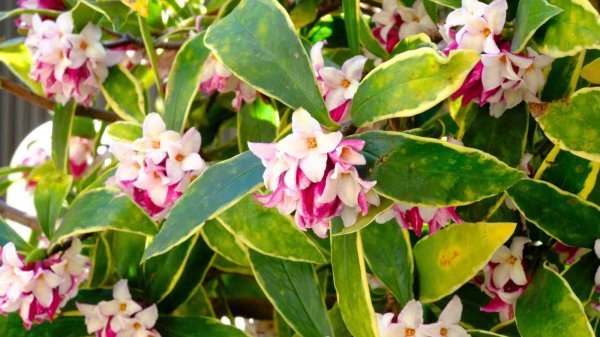
Winter daphne (Daphne odora) is an evergreen shrub that offers deep purple-pink blossoms in late winter with an intensely sweet fragrance. It prefers moist, well-drained soil and slow establishment, making it a good choice near walkways or patios where its scent can be appreciated. Cultivars like 'Aureomarginata' feature variegated foliage, while 'Alba' offers white flowers.
Dwarf false cypress (Chamaecyparis pisifera 'Filifera Nana') is a slow-growing evergreen that forms a compact mound of blue-green, thread-like foliage, reaching 2-5 feet in height. It maintains its color year-round, with some varieties like 'Sungold' showing gold tips and 'Vintage Gold' displaying orange-gold tones. In cold temperatures, foliage may take on a purple-bronze hue.
Pieris japonica, also known as lily-of-the-valley shrub, produces delicate white bell blooms that begin as pearly beads in fall and open in late winter to early spring. Its evergreen leaves emerge with bronze or red new growth, and cultivars like 'Mountain Fire' offer fiery red new growth. Pieris thrives in slightly acidic, well-drained soil and is a favorite of bumblebees.
Camellias (Camellia spp.) are evergreen shrubs that bloom in fall, winter, or early spring, depending on the species. Camellia sasanqua flowers in fall and winter with smaller blooms, while Camellia japonica blooms in late winter and early spring with large, ruffled flowers. They grow best in the warmth and humidity of the American South, tolerating coastal conditions and acidic soils.
Grasses, Groundcovers, and Trees for Year-Round Texture
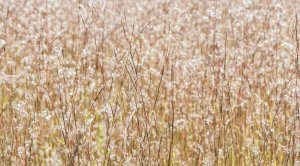
Switchgrass (Panicum virgatum) is a native prairie grass that adds movement and texture, with varieties like 'Northwind' turning yellow in fall and 'Cheyenne Sky' transitioning to wine red. Leaving the grasses standing in winter provides seedheads for songbirds and shelter for overwintering insects.
Creeping phlox (Phlox stolonifera) is a low-growing groundcover that spreads quickly, producing fragrant purple-blue blooms in spring. Cultivars like 'Sherwood Purple' and 'Fran's Purple' offer mildew resistance and vigorous growth, making them suitable for rock gardens and slopes.
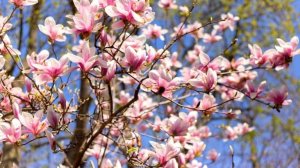
Rosebud cherry (Prunus subhirtella), also known as Higan cherry, is a specimen tree with magenta buds that open to pinkish-white blossoms in late winter. Its peeling reddish bark, red berries that turn black, and orange-red fall foliage provide interest across seasons. Weeping cultivars like 'Pink Snow Showers' and 'Pendula' add arching branches.
Hellebore (Helleborus orientalis) blooms in late winter with flowers in shades from dark to pale, and its dark green leaves are attractive all year. It thrives in partial to full shade, spreads slowly to form a groundcover, and is deer-resistant. It grows best in well-drained soil under a deciduous canopy that provides winter sun and summer shade.
Finally, blue spruce (Picea pungens) offers a conical habit with waxy blue needles that retain color and resist drought. Native to the central Rocky Mountains, it is suitable for cool climates (zones 3-7). Dwarf and weeping cultivars like 'Fat Albert' and 'The Blues' fit smaller spaces and provide contrast in waterwise landscapes.
These 13 plants demonstrate that a garden can be a source of beauty and ecological support throughout the year, requiring thoughtful selection and placement to maximize their multi-season potential.