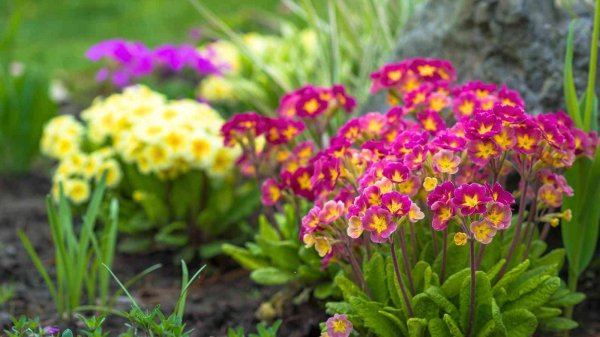
Gardeners facing the dual challenge of rocky terrain and limited sunlight now have a wealth of options to transform these areas into vibrant displays. A new guide highlights more than a dozen perennials and groundcovers specifically suited for shaded rock gardens, offering solutions for slopes, crevices, and woodland edges.
Rock gardens, traditionally inspired by alpine landscapes, rely on well-draining, lean soil and a mix of plant scales—from tall shrubs to miniature groundcovers. In shaded spots, where afternoon sun is scarce, plants with unique textures and colorful foliage become essential. The following selections, drawn from horticultural expertise, are proven performers in partial to full shade, many with the added benefit of drought tolerance.
Early Bloomers and Foliage Stars
Among the earliest to flower, hellebores (Helleborus orientalis) produce nodding, cupped blooms in late winter, with dark green, palmate leaves that remain attractive year-round. These deer-resistant perennials thrive in well-drained soil and slowly colonize, making them a low-maintenance choice for zones 4-9. They perform best under deciduous trees, where they receive winter sun and dappled summer shade.
Another standout is columbine (Aquilegia spp.), a North American native wildflower with lantern-shaped flowers in hues of red, yellow, blue, purple, and pink. Its tubular blooms attract hummingbirds and pollinators, and the plant tolerates dry conditions once established. In cooler climates, columbine can handle sunnier spots, but it prefers protection from intense afternoon heat.
For dramatic vertical interest, acanthus (Acanthus mollis) offers architectural foliage and tall spikes of pinkish-white flowers with purple bracts in summer. This Mediterranean native, hardy in zones 7-10, grows up to six feet tall and thrives in well-draining soils, whether dry or moist.
Groundcovers and Texture Makers
To soften rocky edges and fill bare spots, lamium (Lamium maculatum) forms a low mat of silver, variegated, or gold leaves, with pink, purple, or white flowers from late spring to frost. It tolerates dry shade but requires good drainage to avoid crown rot. Gardeners should note its vigorous spreading habit and check regional invasive species lists before planting.
Wild ginger (Asarum spp.) is another excellent groundcover, with thick, heart-shaped leaves that may feature silver mottling. Its roots emit a spicy, ginger-like aroma. This slow-spreading perennial tolerates clay and rocky soils, making it ideal for rain gardens and shaded rockeries. The North American native Asarum canadense is hardy in zones 4-6 and prefers cool, moist conditions.
For a delicate touch, bleeding heart (Dicentra spp.) produces heart-shaped blooms in white, pink, and fuchsia on arching stems in late spring. The finely cut foliage pairs well with ferns and other shade lovers, and it goes dormant in summer heat, making it a transient but charming presence.
Unique Forms and Seasonal Interest
Epimedium, also known as barrenwort or fairy wings, brings winged leaves with dramatic mottling and delicate spurred flowers in summer. These rugged perennials thrive in deep, dry shade and are low-maintenance, with varieties like 'Pretty in Pink' and 'Pink Champagne' offering specific color combinations.
Hostas provide lush foliage in a range of sizes and colors, from blue to chartreuse and variegated. Miniature varieties, such as 'Blue Mouse Ears', are particularly suited for rock gardens, with compact roots and petite leaves. Morning sun is best for bright or variegated types to maintain their color.
Other notable mentions include hardy cyclamen (Cyclamen coum and C. hederifolium), which bloom in late winter and autumn, respectively, and are Royal Horticultural Society Award of Garden Merit recipients. Japanese painted fern (Athyrium niponicum) offers frosty fronds in silver, purple, and green, while carex (sedge) provides soft, arching mounds that tolerate dry shade. Solomon's seal (Polygonatum spp.) adds architectural structure with arching stems and bell-shaped flowers, and seaside daisy (Erigeron glaucus) brings lilac-pink daisies from spring to fall, even in coastal conditions.
By incorporating these plants, gardeners can create a dynamic, multi-seasonal rock garden that thrives in shade, proving that challenging sites can become highlights of the landscape.