Gardeners seeking a bold yet cohesive landscape often turn to mass planting—the practice of grouping identical plants in sweeping drifts or clusters. This technique, rooted in natural plant communities where species repeat across a landscape, delivers visual unity and a sense of balance. By repeating a single variety, the garden gains structure, serving as a backdrop for specimen plants and creating a streamlined, intentional look that works in formal, informal, or naturalistic settings.
The concept is simple: instead of dotting individual plants across a bed, concentrate them in groups. This approach amplifies the plant's visual weight, turning a modest perennial into a striking display. When combining different masses, gardeners should pair species with matching sun, moisture, and soil needs, and space them properly to allow for growth and infill. The result is a garden that feels organized and abundant, even in small spaces.
Shade-Loving Stars for Massed Plantings
For shaded areas, astilbe (Astilbe spp.) offers feathery plumes in pink, red, purple, and white, rising above glossy, copper-tinged foliage. Hardy in zones 4-9, this long-lived perennial thrives in partial to full shade with consistent moisture and high organic matter. Pair it with hostas, columbines, ferns, or heuchera for a layered effect. Hellebores (Helleborus orientalis) provide late-winter blooms in creamy white, soft pink, or wine red, with evergreen leaves that persist year-round in many climates. They colonize slowly in moist, well-drained woodland soils and look spectacular under trees or as a naturalized ground cover. Hostas (Hosta spp.) bring sculptural leaves in shades of blue-green, emerald, and variegated patterns, with lavender or white summer blooms that attract hummingbirds. They prefer partial to full shade and consistently moist soil, with morning sun benefiting brighter varieties.
Christmas ferns (Polystichum acrostichoides) add a soft, arching texture to shaded borders. Hardy in zones 3-9, these evergreen ferns offer multi-season interest and pair well with astilbe, heuchera, and tiarella. Caladiums (Caladium spp.), grown from tubers, provide arrow-shaped leaves in red, pink, white, or green combinations. Plant them after nighttime temperatures stay above 60°F, and they will flourish until frost in partial to full shade, with some red lance-leaved varieties tolerating full sun.
Sun-Loving Perennials and Annuals for Bold Drifts
In full sun, black-eyed Susan (Rudbeckia fulgida) delivers golden daisy-like flowers with chocolate centers from summer through frost. Hardy in zones 3-9, this native wildflower thrives in heat, humidity, and drought, self-seeding freely for successional blooms. It is ideal for pollinator gardens and naturalized plantings among ornamental grasses. Echinacea (Echinacea purpurea), or purple coneflower, offers purple petals around an orange center, attracting beneficial insects and providing winter seed heads for wildlife. Hardy in zones 3-9, it prefers well-draining soil and full sun, reseeding naturally for waves of color.
Zinnias (Zinnia elegans) bring vibrant, double-disc flowers in a spectrum from white to magenta, with edible petals that garnish salads or desserts. Hardy in zones 2-11, they need full sun, good air circulation, and well-drained soil to prevent fungal issues; disease-resistant varieties like 'Queeny Lime' and 'Profusion' are recommended for humid climates. Cosmos (Cosmos spp.), native to the Americas, produce airy, daisy-like blooms in yellow, apricot, pink, and red. They grow easily in hot, dry conditions, reseed naturally, and should be cut back to 12-18 inches after flowering to encourage reblooming.
Butterfly milkweed (Asclepias tuberosa) features bright red-orange bloom clusters that attract monarchs and predatory insects like wasps and lacewings. For moist areas, swamp milkweed (Asclepias incarnata) offers deep pink blooms. Gardeners should consult the Xerces Society for region-specific native milkweed options and avoid tropical milkweed (Asclepias curassavica), which can harm native butterfly reproduction.
Shrubs, Bulbs, and Groundcovers for Structure
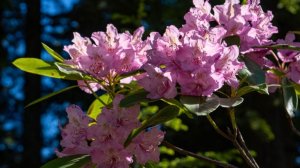
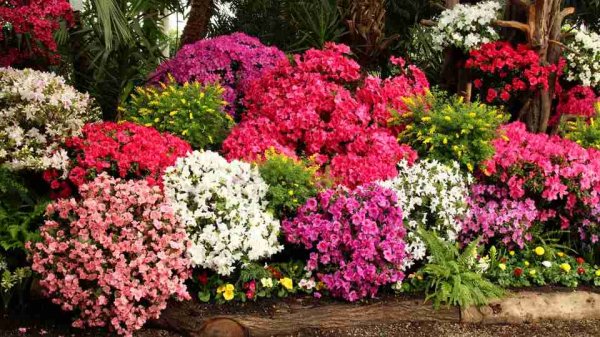
Azaleas (Rhododendron spp.) make a bold statement in groups, with trumpet flowers in white, pink, purple, and red that attract hummingbirds and bees. Hardy in zones 4-8, they thrive in partial to full shade with rich, well-drained, evenly moist soil. Hydrangeas (Hydrangea spp.) offer clusters of white, blue, or pink blooms in summer, pairing beautifully with evergreens and low-growing boxwood. Cultivars like H. paniculata 'Firelight' transition from creamy white to fiery pink. Roses (Rosa spp.) exude charm when massed, whether as ground covers or shrubs, and benefit from anchoring evergreens like arborvitae or boxwood. They require full sun, rich, well-drained soil, and adequate spacing for air circulation to reduce fungal diseases.
Daffodils (Narcissus spp.) are among the showiest spring bulbs, with trumpet blooms in yellow, white, apricot, and pink. Plant bulbs in fall, clustered 3-6 inches apart and 4-6 inches deep, and allow leaves to persist after flowering to store energy for the next season. Daylilies (Hemerocallis) offer successional blooms that open and close daily, with flower stems rising above strappy leaves. Hardy in zones 3-9, they adapt to various soils and thrive in full sun, complementing coreopsis, echinacea, and dark foliage plants.
Mass planting is a versatile strategy that works in any garden size, from small containers to expansive borders. By choosing species with similar cultural requirements and arranging them in drifts, gardeners can achieve a professional, cohesive look that evolves through the seasons. Whether the goal is to attract pollinators, create a shade retreat, or simply make a bold statement, these 15 species offer a reliable palette for impactful displays.