Gardeners seeking a touch of prehistoric wonder need look no further than the living fossils that have survived millions of years. These ancient species, which outlasted dinosaurs and multiple extinction events, are now adaptable additions to contemporary landscapes. With new dwarf varieties and cultivars, even small urban plots can host these botanical relics.
Among the most accessible living fossils is the ostrich fern (Matteuccia struthiopteris), a shade-loving plant that traces its lineage to the Mesozoic era, over 200 million years ago. This moisture-loving fern thrives in woodland and cottage gardens, reaching heights of 5 to 6 feet in hardiness zones 2 through 7. Its spring fiddleheads are a regional delicacy in the Pacific Northwest and Western Canada, though caution is advised—only ostrich fern fiddleheads are safe for consumption, and even then, only in moderation due to potential toxicity.
For wet areas, the horsetail (Equisetum hyemale) offers an architectural presence with its whorled, bamboo-like stems. This Jurassic-era plant, which flourished alongside dinosaurs, is extremely invasive, making containment essential. Growing it in a pot without drainage holes is a recommended strategy to prevent its rhizomes from spreading. Historically, its high silica content made it a natural scrubber for dishes.
Ginkgo: A Living Fossil for Urban and Small Spaces
The ginkgo tree (Ginkgo biloba) is a favorite among ancient plants, known for its fan-shaped leaves that turn brilliant gold in autumn. Mature specimens can reach 50 to 80 feet, but they grow slowly, making them suitable for large lawns and street plantings. Their tolerance for pollution, heat, and poor soil makes them ideal for urban environments. However, only male trees should be planted, as females produce foul-smelling fruit. For smaller gardens, dwarf cultivars like 'Troll' and 'Mariken' offer the same charm in shrub form.
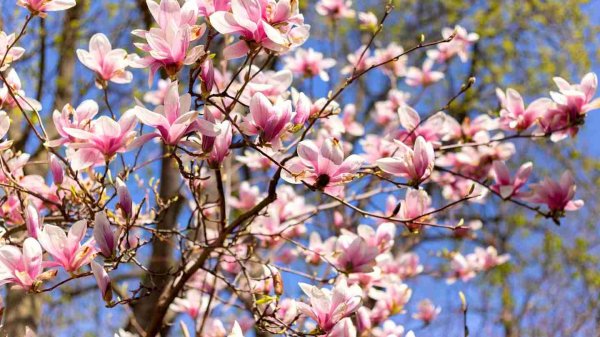
Magnolias, which evolved 95 million years ago, are another ancient group that predates bees, relying on beetles for pollination. Their tough, fleshy flowers are resistant to beetle damage. With both evergreen and deciduous species, magnolias offer a range of sizes and bloom times. In colder regions, deciduous varieties like Magnolia x soulangeana and M. stellata provide spectacular spring displays, while evergreen M. grandiflora thrives in the South.
Maples and Dawn Redwood: Versatile Survivors
Maples (Acer spp.) have graced the Earth for over 25 million years, with species adapted to nearly every climate. From the towering old-growth trees of the Pacific Northwest to the compact Japanese maples suited for Southern California, there is a maple for every yard. Cultivars like 'Bloodgood' and 'Butterfly' offer color and size options, and their winged samaras can be collected and planted to grow new trees.
The dawn redwood (Metasequoia glyptostroboides) is a remarkable living fossil, thought extinct for 25 million years until its discovery in China in 1943 by forester Chan Wang. This deciduous conifer, which can grow 70 to 100 feet tall, is hardy in zones 4 through 8. Dwarf and weeping varieties like 'Miss Grace' and 'Gold Rush' provide alternatives for smaller gardens.
Unique Specimens: Monkey Puzzle, Giant Rhubarb, and Sago Palm
For those with space, the monkey puzzle tree (Araucaria araucana) is a striking specimen with sharp, geometric leaves. Native to Chile, it is cold-hardy to zone 7 and can reach 80 feet tall. Similarly, the giant rhubarb (Gunnera manicata) offers dramatic foliage, with leaves up to 8 feet wide, thriving in rich, moist soil and partial shade. It is hardy in zones 7 to 10 but can be invasive in some regions, so check local guidelines.
The sago palm (Cycas revoluta), though not a true palm, is a slow-growing evergreen related to conifers. It is drought-tolerant once established and hardy to 15°F, making it suitable for zones 9 to 12. Since it does not transplant well, careful placement is crucial.
These ancient plants, once thought to be relics of the past, are now accessible to gardeners of all skill levels. Whether creating a dedicated 'dinosaur garden' or simply adding a living fossil to a mixed border, these species offer a unique connection to Earth's deep history.